Regulation (EU) 2023/1542 raises Europe's waste-battery collection trajectory and binds it to producer financing. Articles 59–61 set the collection rates, Articles 55–58 establish separate collection infrastructure, and the producer-responsibility articles require registration and payment in every member state of sale. This paper explains the numbers, who funds them, and what a nickel-metal hydride (NiMH) exporter's customer must be able to demonstrate.
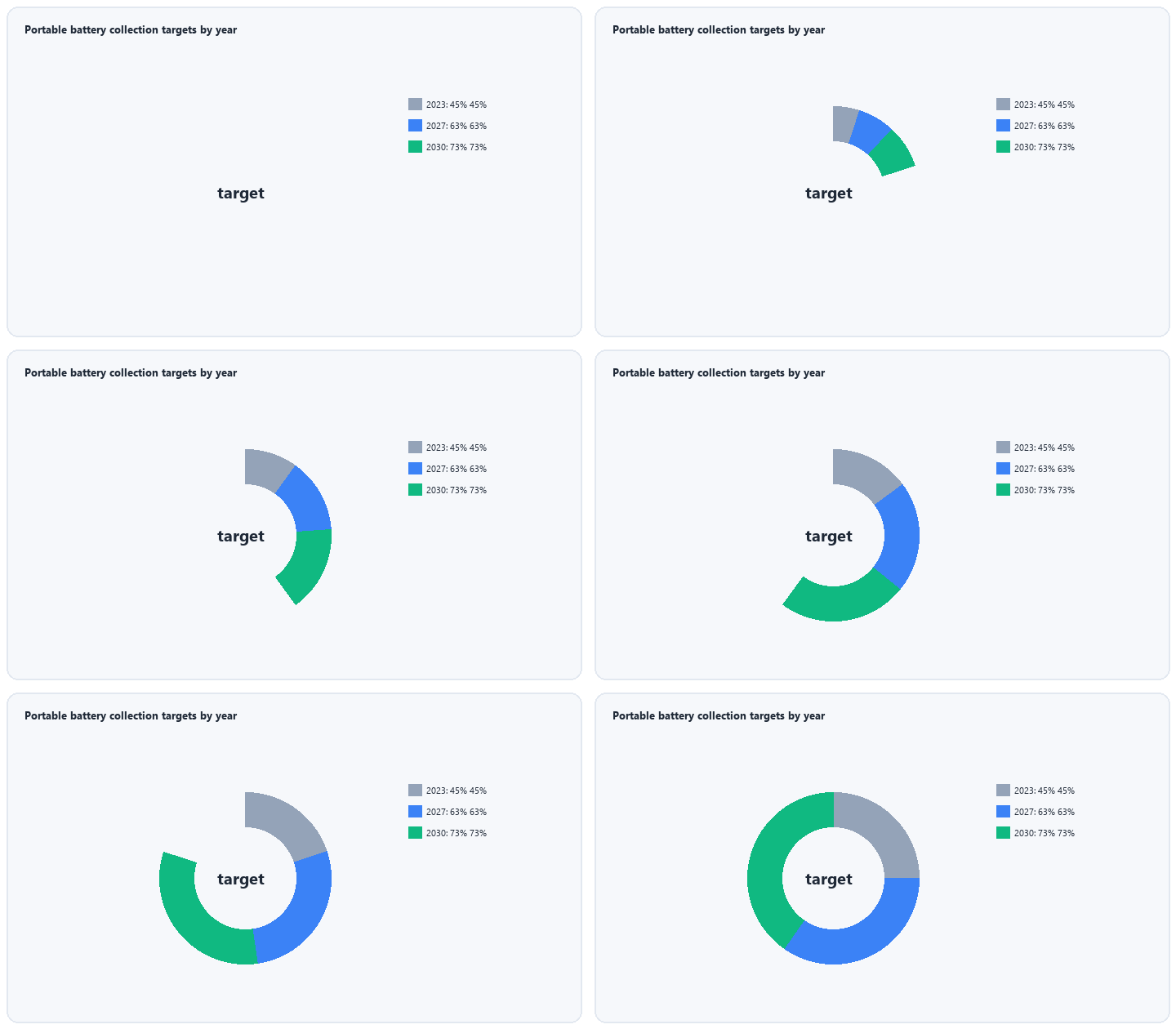
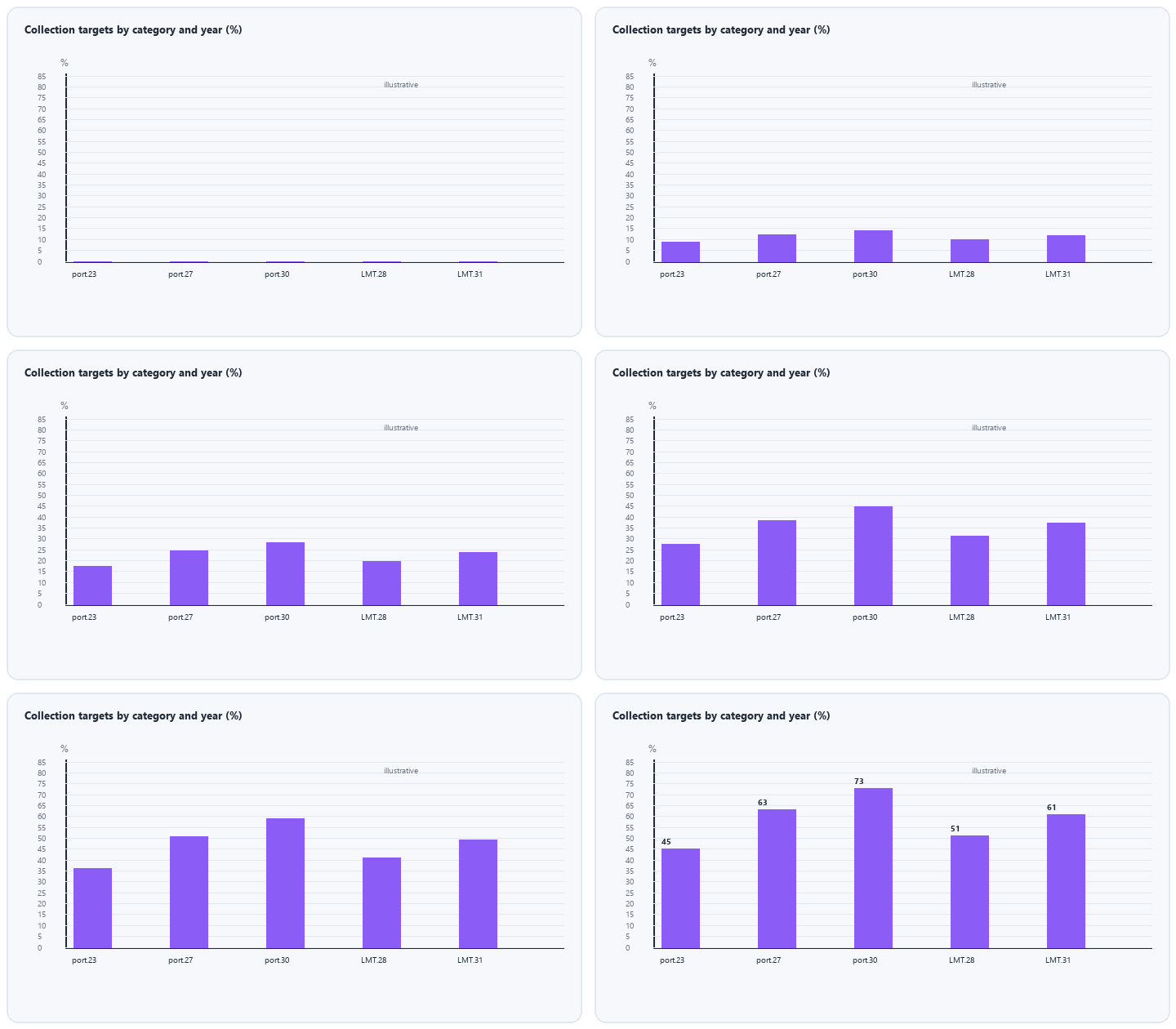
Portable waste batteries follow a staged path: 45 % collection rate by 2023, 63 % by 2027 and 73 % by 2030, measured as collected mass against the mass placed on the market in the preceding three years. LMT batteries follow later: 51 % by 2028 and 61 % by 2031. Member states report annually, and the rates are minimums — several countries already exceed them through dense take-back networks. Separate collection is mandatory: batteries may not enter mixed municipal waste, and distributors must take back small waste batteries free of charge with no purchase obligation, while producers operate or finance the downstream sorting and treatment chain.
The collection rate is a mass-flow statistic: separately collected portable batteries entering authorised treatment, divided by portable batteries placed on the market (three-year rolling average), with adjustments for exports of collected waste under shipment rules. Producers report placed-on-market tonnage by chemistry and collected tonnage through their producer-responsibility organisation (PRO) or national register; the crossed-out wheeled-bin label exists precisely to steer consumers into this separate stream. For an exporter, the practical consequence is chemistry-level reporting support: importers must know whether a pack is NiMH, alkaline or lithium to allocate treatment costs and recovery statistics correctly — another reason Article 13 chemistry labeling must be accurate.
There is no EU-wide battery EPR registration: the producer — typically the brand owner or, for non-EU sellers, the importer — must register in each member state where batteries are placed on the market, contract an approved take-back scheme (PRO), pay eco-contributions calculated on tonnage and chemistry, and report sales and collection data periodically. Germany routes registration through the Stiftung EAR register under the BattDG implementation law and requires participation in an approved Rücknahmesystem; France uses the national register and approved eco-organismes; each member state has its own portal, number format and fee schedule. Authorised representatives can carry the duty for non-established sellers, but the obligation cannot be skipped.
Although EPR registration sits with the EU-side producer, the exporter supplies the data the registration depends on: battery category and chemistry (NiMH), net mass per unit and per shipment, cell versus pack classification, hazardous-substance declarations, and dismantling/recycling information for treatment facilities. Design-for-recycling documentation — material composition, identification of components, safe removal guidance — feeds Annex XII treatment requirements. Exporters who package this data per shipment save their importer a monthly data-collection cycle and reduce the risk of misreported chemistry tonnage, which national audits treat as an offence.
Since 18 August 2025 the producer-responsibility and due-diligence rules apply in full, and online marketplaces verify EPR registration numbers before allowing battery listings (detailed in our marketplace-enforcement paper). A buyer therefore qualifies suppliers not only on price and quality but on the completeness of the data needed to stay registered. NiMH carries a structural advantage in the collection economy: its nickel and steel content gives collected NiMH positive residual value, lowering net treatment fees relative to chemistries with costly processing — a point worth quantifying in total-cost discussions.
Weijiang Power supplies every NiMH shipment with the EPR support data EU producers need: category and chemistry declaration, unit and shipment net masses, composition and dismantling information, and hazardous-substance statements in the formats national registers and PROs accept. Send your destination countries and we will return the per-country data sheet alongside the commercial invoice, so your importer's EPR reporting closes without chasing the factory.


