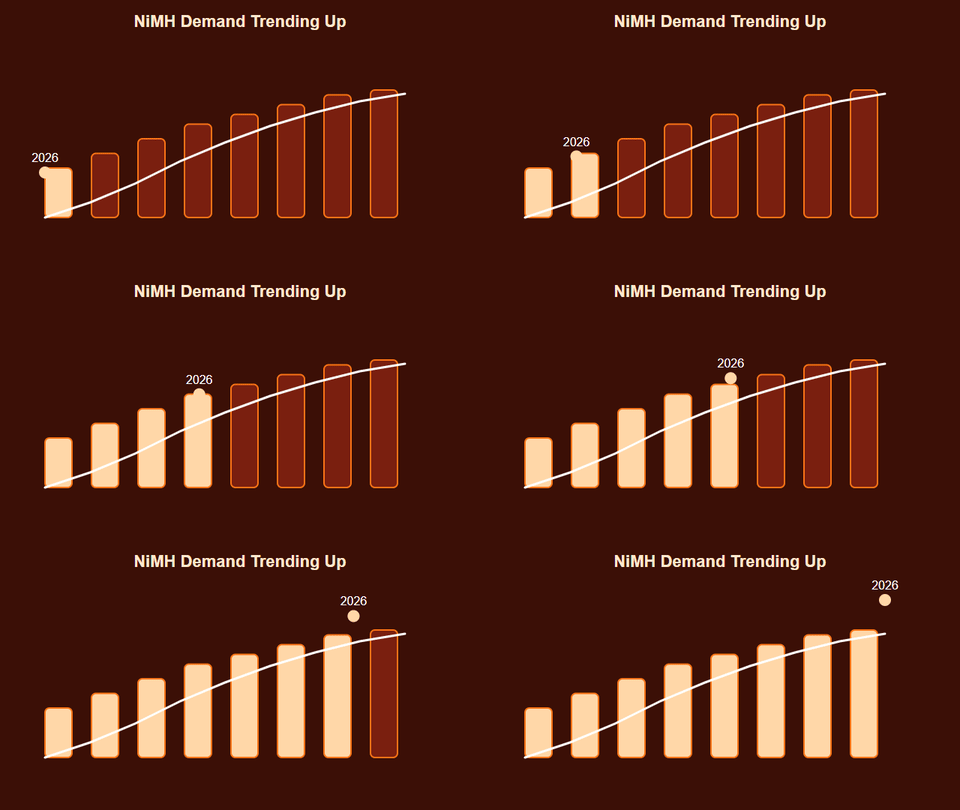
Nickel-metal-hydride (NiMH) rarely makes the headline energy-storage news that lithium does. Yet beneath the surface, 2026 is shaping up to be one of the most consequential years for NiMH in a decade. Three forces are converging to reshape demand: the sustained growth of hybrid-electric vehicles that still lean on NiMH, a tightening regulatory and sustainability framework in the European Union, and structural shifts in the commodity prices of nickel and rare earths. For OEMs, distributors and pack integrators, understanding these trends is not academic — it directly affects sourcing strategy, compliance and product positioning.
Hybrid-electric vehicles (HEVs) remain the single largest industrial consumer of NiMH cells. Full and mild hybrids use NiMH packs for their proven cycle life, safety and wide-temperature tolerance — qualities that matter enormously in a pack bolted under a car floor for a decade or more. In 2026 the HEV segment continues to expand across every major region, and OEMs value NiMH for its maturity: hundreds of millions of packs have validated its reliability, its degradation is gradual and predictable, and its benign-failure behaviour suits a safety-critical application better than chemistries that demand more elaborate thermal management.
Importantly, the HEV opportunity is no longer confined to the largest automakers. A growing wave of two-wheeler hybrids, delivery vans, marine hybrids and off-highway equipment is adopting NiMH packs for start-stop, torque-assist and energy-recovery duty. Each of these applications rewards the same traits that made HEV NiMH successful: long cycle life, tolerance of partial charge, safety and dependable cold-weather cranking.
Perhaps the most structural change is regulatory. The EU Battery Regulation — which entered force over 2023–2025 and tightens through this decade — imposes new obligations around carbon footprint, recycled-content and extended producer responsibility for batteries sold into the EU. NiMH holds a genuine advantage here: the battery is cadmium-free, and its nickel content is highly recyclable, with established hydrometallurgical and pyrometallurgical routes recovering nickel, cobalt and rare earths from spent packs.
This is not a marketing talking point — it is becoming a compliance lever. Buyers that must report recycled content and end-of-life recovery are increasingly favouring chemistries with proven, documented recycling loops. NiMH's recyclability, combined with its long service life (which delays the point at which a battery enters the waste stream at all), positions it well within the circular-economy requirements now expected by European procurement teams.
NiMH's bill of materials centres on nickel hydroxide (positive) and a rare-earth-containing mischmetal alloy (negative, typically AB5 or AB2). Two commodity dynamics matter in 2026:
The practical takeaway for sourcing teams: NiMH pricing is best managed with transparent, index-linked agreements and multi-source alloy strategy, rather than fixed prices that ignore commodity movement.
Spent NiMH packs are increasingly treated as a resource rather than waste. Modern recycling processes recover nickel (back into new electrodes or stainless steel), cobalt, and the rare-earth elements that were once largely lost. As EU and global recycled-content rules firm up, the availability of recycled nickel feedstocks is improving — a trend that reinforces NiMH's sustainability story and, over time, could stabilise part of its cost base.
NiMH in 2026 is older than lithium but newly relevant. Its combination of safety, cycle life and temperature tolerance keeps it indispensable in hybrids, while its recycling maturity and cadmium-free composition make it one of the best-positioned chemistries under tightening sustainability rules. For OEMs and distributors planning the next three to five years, NiMH is not a legacy holdover — it is a strategic mainstay of a resilient, compliant battery portfolio.
Weijiang Power manufactures and supplies NiMH cells and packs for hybrid, industrial, consumer and standby applications, with documented compliance data, low-cost-of-ownership design and factory-direct OEM support. If you are reviewing your NiMH sourcing strategy for 2026, contact us with your application, volume and target markets — we will help you build a resilient, compliant supply chain around a chemistry the market is rediscovering.