Choosing a cell for a low-drain device is a small modelling problem, and doing it quantitatively removes the guesswork from the alkaline-versus-rechargeable decision. This selection paper builds a self-discharge budget: it separates the charge a device actually consumes from the charge a cell loses sitting idle, compares that budget against an alkaline's shelf-life curve, and shows how to choose cell capacity, the number of rotating cells and the recharge cadence. The method is deliberately simple enough for a buyer or product manager to apply on a spreadsheet while remaining faithful to the underlying electrochemistry.
Annual charge demand is the time integral of current: background current for the full year plus event current multiplied by event duration and frequency. For most low-drain devices the background and standby term dominates the arithmetic even when the events feel dominant to the user, which is why measuring quiescent current matters more than measuring the button-press peak. Expressing the result in milliampere-hours per year gives the first budget line: how much charge the device would take from a perfect zero-self-discharge cell over twelve months.
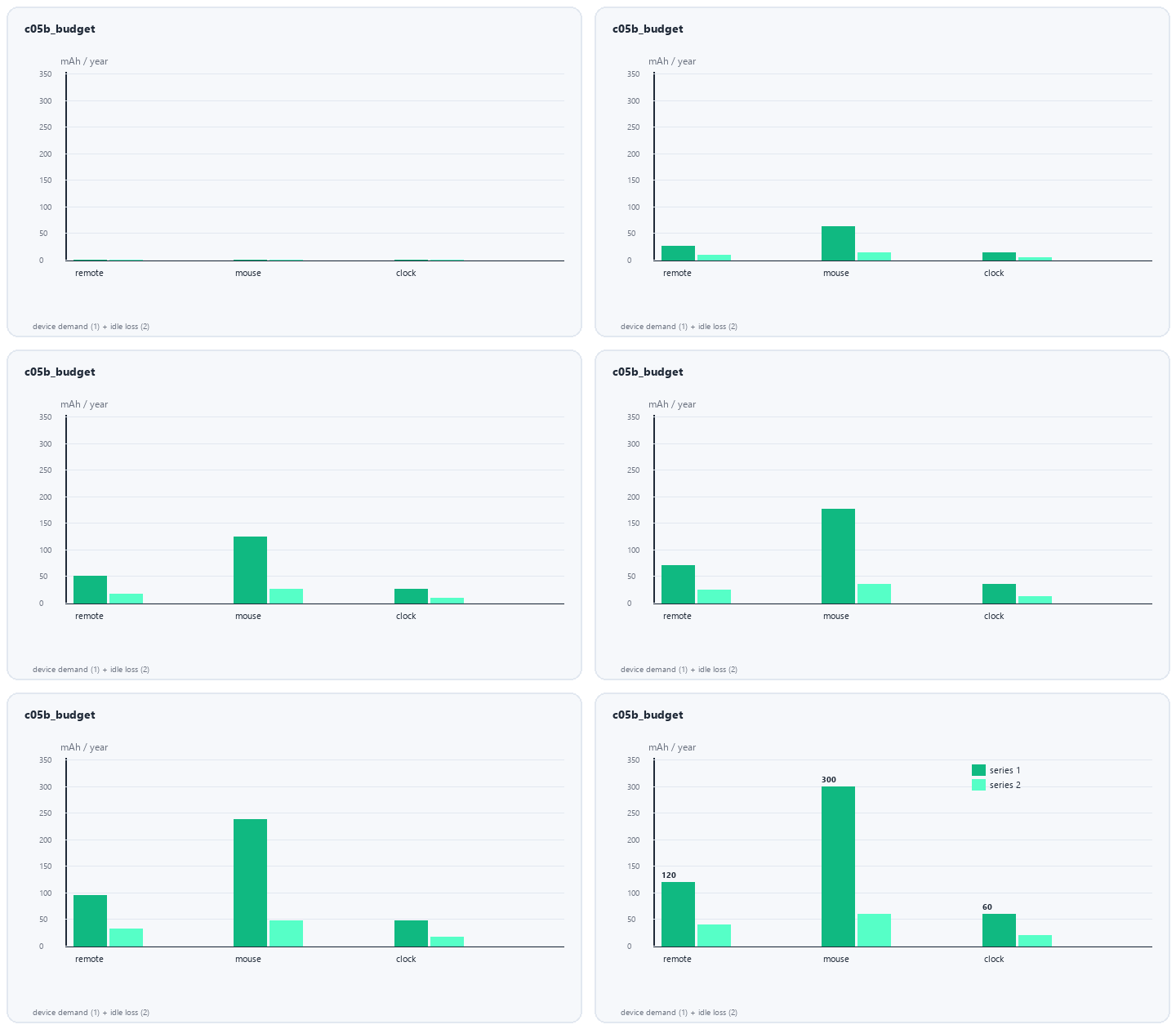
No real cell is perfect. A conventional NiMH loses a substantial front-loaded fraction of capacity per month, an LSD NiMH loses a much smaller and tapering fraction, and an alkaline loses capacity through shelf degradation plus a small leakage risk that rises with age and heat. The total charge the cell must start with is device demand plus idle loss over the chosen service interval. Because idle loss compounds on the remaining charge, the honest calculation steps month by month rather than applying a flat annual percentage - and it immediately shows why conventional NiMH fails standby duty while LSD NiMH becomes viable.
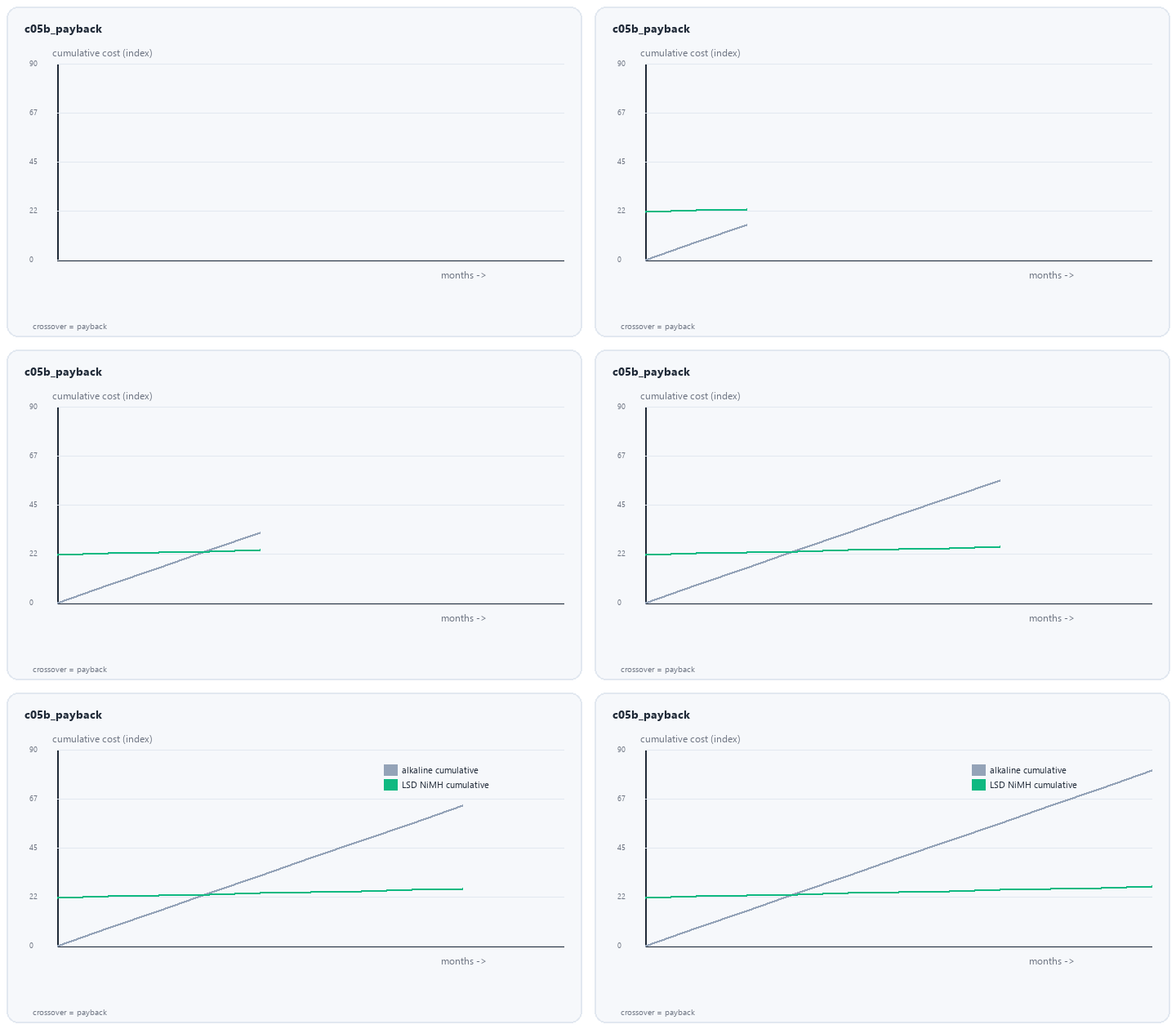
The fair comparison is effective energy delivered per year per currency spent and per unit environmental burden, not nominal mAh. The animated budget chart below stacks device consumption and idle loss for alkaline, conventional NiMH and LSD NiMH across a multi-year horizon: the alkaline must be replaced as its capacity is exhausted or as leakage risk makes replacement prudent, the conventional NiMH needs frequent recharging that defeats standby use, and the LSD NiMH rides a long flat interval between recharges for years of cycling. The crossover points - where rechargeable becomes cheaper and lower-burden - fall out of the arithmetic rather than from marketing.
With the annual budget known, capacity is chosen to set the service interval: a target of, say, six to twelve months between recharges in a remote dictates the minimum usable capacity after self-discharge, not the largest cell on the shelf. For a household, a small rotating pool - one set in the device, one set charged and ready - eliminates downtime entirely and is the model IKEA-style retail bundles support by selling cells with a charger. Over-sizing capacity rarely helps in low-drain duty because the limiting factor is idle time, not delivered current; matched cells matter wherever two or more sit in series.
Low-drain rotation favours a gentle, good-termination charger over a rapid one, because cells are recharged infrequently and there is no benefit - and some stress - from fast charging cells that will then sit for months. A charger with independent bays and maintenance-safe behaviour suits a household rotating several sizes. The sizing model should also include the charger's own standby draw if it stays plugged in, a small but real term in an honest household energy budget and a detail increasingly relevant to ecodesign-conscious European buyers.
The procedure yields a one-page decision: device annual demand, idle-loss budget by chemistry, required capacity for the target interval, rotating-cell count, charger style and the resulting multi-year cost and waste comparison. It also flags the few devices where the model points back to a primary cell. Presented this way, the alkaline-versus-LSD-NiMH choice stops being ideological and becomes an auditable calculation - the kind of evidence a retail buyer can defend internally and a manufacturer can stand behind. Paper C shows how to validate the model's assumptions with measured retention and cut-off behaviour.
Weijiang Power builds low-drain sizing models for LSD NiMH AA/AAA from measured background current, IEC 61951-2 retention and target service interval, with rotating-cell and charger recommendations. Send your device quiescent and event currents and we will return a quantitative alkaline-versus-NiMH budget.


